
The Best Time to Buy a TV Is Not Black Friday (And Other Things Costco Taught Me)
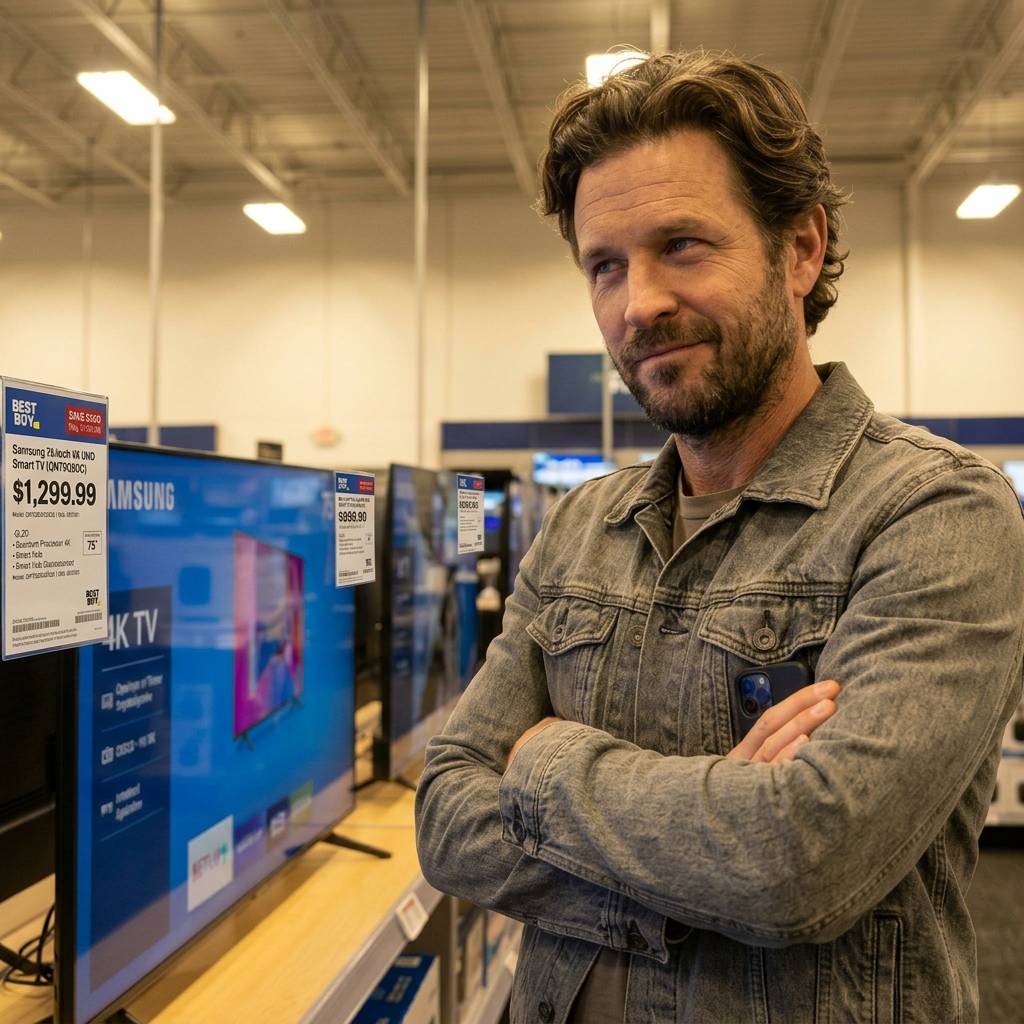
Let me set the scene...
Two teenagers. A Star Wars marathon that has been "happening next weekend" for approximately four months. A living room TV that is technically fine but also technically the size of a dinner tray. And a Costco membership that I have been paying for since before my oldest was born.
Something had to give.
So in late January, right before the Super Bowl -- PRO TIP: which is when you should be buying a TV, by the way, not Black Friday, I'll get to that -- I walked out of Costco with a 75-inch QLED 4K television and the mild existential crisis that comes with buying something that large.
Here's what I found out.
First, Let's Talk About the Timing
Everyone thinks Black Friday is the move for TVs. It is not the move for TVs.
Black Friday TV deals are real, but they're almost always on models that were manufactured specifically for Black Friday -- stripped-down specs, unfamiliar brand names, sizes that are slightly off from what you actually want. The retailers know you're coming. They prepare accordingly.
The Super Bowl window -- roughly two to three weeks before the game -- is where the real deals live. Manufacturers and retailers want people watching the big game on new screens. They discount actual inventory of actual good TVs. Not mystery models built for a sale. And the reality is, just like with cars, the new models are coming out soon and the retailers need to space so they want to clear out the old models that have been sitting on their floor all year.
I saved about $200 off what this TV was running in November. On a TV that is legitimately better than most of what was on sale in November.
File that away.
 QLED vs OLED -- The Part Where I'm Straight With You
If you've done any TV research recently, you've encountered this debate. And I'm going to give you the straight version.
OLED is better. Technically. The blacks are deeper, the contrast is superior, each pixel produces its own light which means truly infinite contrast ratios. If you're watching in a dark room and you care intensely about picture quality, OLED is the answer.
It is also significantly more expensive. We're talking several hundred to over a thousand dollars more for comparable screen sizes. And it has burn-in risk if you watch a lot of content with static elements -- news tickers, sports score bugs, that kind of thing.
QLED -- which is Samsung's quantum dot LCD technology -- is not OLED. Anyone who tells you otherwise is either confused or selling something. But it is very, very good. Especially at the 75-inch size. Especially at the price point Costco was offering.
The brightness on QLED is actually better than OLED in well-lit rooms. My living room has windows. This matters.
For Star Wars marathons with two teenagers who will absolutely have the lights on and be asking me questions about the plot and eating snacks loudly -- QLED is the correct television.
What Costco Gets Right
I've been burned by enough electronics purchases to appreciate what Costco does differently.
Their return policy is essentially unlimited on electronics -- or close enough that it doesn't matter. If something goes wrong, you bring it back. No receipt required because they have your purchase history. No argument. No "have you tried turning it off and on again" from a teenager in a polo shirt.
They also extend the manufacturer warranty. Automatically. Because you're a member. The TV came with a one-year manufacturer warranty. Costco extended it to two years at no additional cost.
And the selection is curated. They don't carry seventeen versions of the same TV in slightly different configurations designed to confuse you. They carry a few good options. You pick one. You go home.
For someone who has approximately zero patience for retail theater, this is genuinely appreciated.
The Actual Experience
Setup took longer than it should have because my kids "helped."
 Picture quality is excellent. The colors are vivid without being oversaturated, the 4K upscaling handles older content well, and the local dimming does a respectable job of handling dark scenes without the whole screen going muddy.
The smart TV interface is Samsung's Tizen OS, which is fine. Not great, not terrible. It finds the apps. It does the thing. I've stopped expecting more than that.
The size is correct. I was skeptical about 75 inches in our space. It is correct. My wife was also skeptical. She has said nothing since we watched the first Star Wars and she could actually see the faces of the characters. That's a win in my book!
The Star Wars marathon is still technically "happening next weekend." But it's happening on a significantly better screen than before. And now we're all excited to make it happen!
The Verdict
🟢 Value for money: Green Light. At the Costco Super Bowl price, this is a genuinely excellent deal for what you get.
🟢 Costco buying experience: Green Light. Return policy and warranty extension alone justify the membership for purchases like this.
🟡 QLED vs OLED: Yellow Light -- proceed with knowledge. QLED is not OLED. It doesn't need to be OLED for most people. Know which one you are before you spend the extra money. You maybe just fine without the extra cost.
🟡 Smart TV features: Yellow Light. They work. They're not exciting. Lower your expectations and you won't be disappointed.
Bottom line: If you're buying a TV and you have a Costco membership, the Super Bowl window is your window. Go in with a size in mind, ignore the spec sheet theater, and look for QLED at this price point. It's not the fanciest option. But in my opinion, it's the right one for most living rooms and most families.
The teenagers and my wife approve. That's the only review that actually matters in my house.


Jerry has two teenagers, a mortgage, and a very specific look he gives products that claim to be 'worth every penny.' Spoiler: most of them are not.
He has been burned. Repeatedly. By gadgets that stopped working in a month two, smart home devices that required a PhD to set up, and premium-priced anything that turned out to be dollar-store quality in a nicer box. At some point he decided that if he was going to keep buying this stuff anyway, he might as well document it so other people don't make the same mistakes.
Jerry is not mean, but he's just done being polite about bad products.
His rule: If he has to read the manual, it's already losing points.