
The Truth About Your Pet's Teeth (That Most Vets Don't Have Time to Tell You)
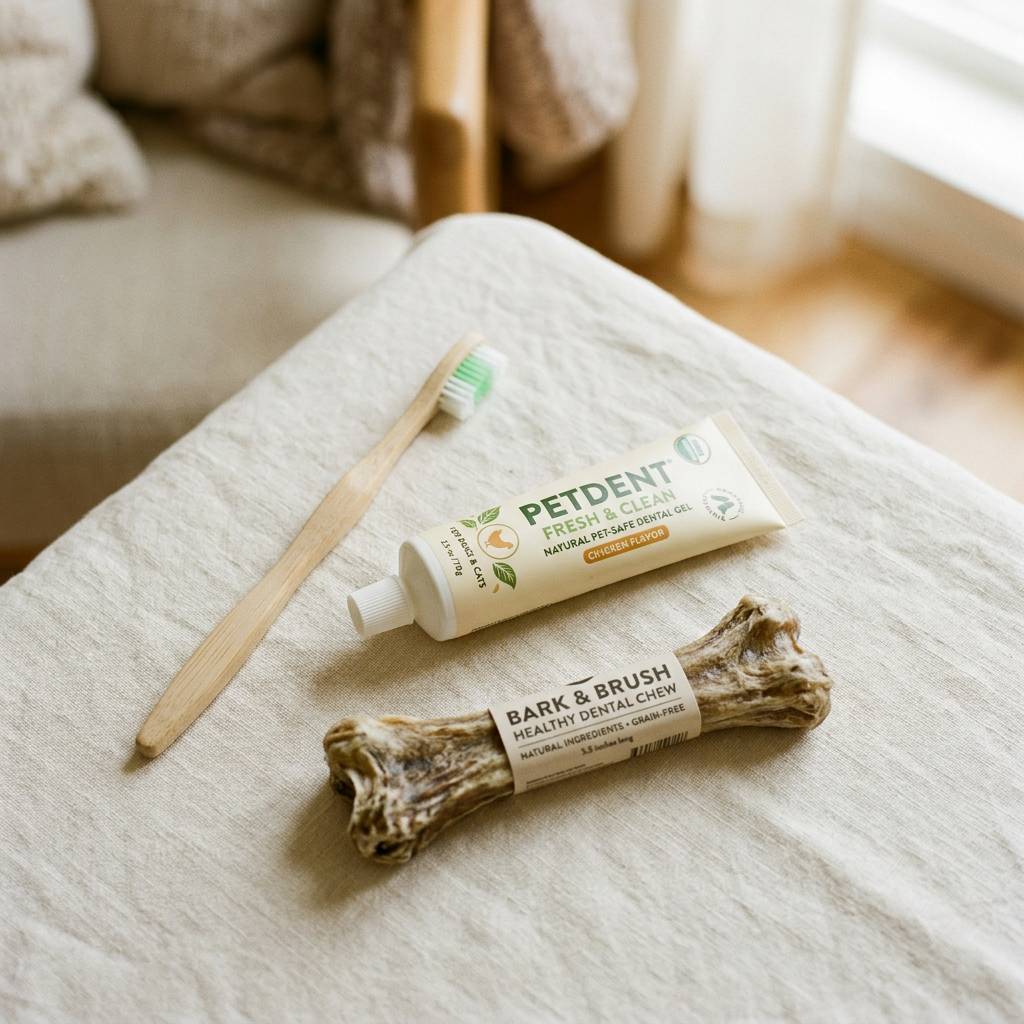
I want to talk about something that doesn't get nearly enough attention.
Not because it's complicated. Not because the information isn't out there. But because most vet appointments run about fifteen minutes, and dental health -- real dental health, not just "brush their teeth if you can" -- takes longer than fifteen minutes to explain properly.
I've worked in vet clinics and animal hospitals long enough to know what gets said and what gets left on the table. And pet dental health? It almost always gets left on the table.
So let's talk about it.
What's Actually Happening in Your Pet's Mouth
What most pet owners don't realize is that dental disease isn't just a mouth problem. By the time a pet is three years old, the majority of dogs and cats already have some form of periodontal disease. Three years old. That's not old. That's barely out of puppyhood for some breeds.
And periodontal disease doesn't stay in the mouth. The bacteria that cause it can enter the bloodstream and affect the heart, kidneys, and liver. This isn't alarmist. This is documented, peer-reviewed, well-established science. The mouth is connected to everything else, just like it is in humans.
The frustrating part? Most of it is preventable. Or at least manageable. With consistent attention, the right tools, and -- honestly -- realistic expectations.
That last part matters. Because a lot of pet owners feel guilty when they can't brush their dog's teeth every single day. And that guilt leads to giving up entirely. Which is the worst possible outcome.
Something is always better than nothing. Let me say that again. Something is always better than nothing.
The Brushing Reality Check
Yes, daily brushing is the gold standard. That's what the research supports. That's what I'd tell you in an ideal world.
But I've also fostered enough animals to know that "ideal world" and "actual Tuesday evening after work" are two very different things. Some pets will never tolerate a toothbrush. Some owners simply don't have the bandwidth. And some animals -- particularly cats -- will look at you with a specific kind of contempt that makes you question every life choice you've ever made.
So here's my actual advice, as someone who has navigated this with dozens of animals over the years:
Start with what you can do consistently. Even three times a week makes a measurable difference compared to nothing. The goal is to establish a routine, not to perform perfection.
Use a pet-specific toothpaste. Never human toothpaste -- the fluoride is toxic to pets, and the xylitol in some formulas is genuinely dangerous, especially for dogs. Pet toothpastes come in flavors like chicken, beef, and peanut butter for a reason. Use them.
The angle matters more than the pressure. You're trying to reach the gum line, not scrub the tooth surface. Gentle circular motions at the gum line. That's where the plaque accumulates and where the disease starts.
What Actually Helps (And What Doesn't)
Dental chews: Some work, some don't. The Veterinary Oral Health Council (VOHC) maintains a list of products that have been independently tested and shown to actually reduce plaque and tartar. If a dental chew isn't on the VOHC list, I'd be skeptical of its claims. Marketing and efficacy are two very different things in this category.
Water additives: These can be useful as a supplemental tool -- not a replacement for mechanical cleaning, but genuinely helpful as part of a broader routine. The key word is "supplemental." If you're using a water additive instead of any other dental care, it's not going to be enough on its own.
Dental powders: I've had real results with these, particularly with animals who won't tolerate brushing. My post on the ProDen PlaqueOff powder goes into specifics if you want the details. The short version: enzymes that work at the biochemical level to break down plaque. Not magic, but real.
Raw bones: Controversial, and I'll own that. Some vets swear by them, some won't touch them. My position: under supervision, appropriate size for the animal, raw only (cooked bones splinter), they can be genuinely beneficial for mechanical cleaning. But they carry risks that you need to weigh against your specific animal's history and health status. This is a conversation to have with your vet, and it's not a blanket recommendation I'm comfortable making.
Dental toys: Better than nothing. Not a substitute for anything else. If your dog loves them and it keeps them chewing, that's positive. Just don't count it as dental care.
Eileen's Input (Which I Did Not Ask For But Am Including Anyway)
My sister Eileen texted me while I was writing this.
Eileen: "Did you know you can get finger toothbrushes? The little rubber ones that go on your finger? I bought a pack of twelve from somewhere and used one of them before Biscuit bit me. Would not recommend for cats. Would recommend the experience of trying it at least once for humility."
Heather: "I've been saying this for years. Cats require a different approach."
Eileen: "The approach I use now is the dental treats and hoping for the best."
Heather: "That is not what I recommended."
Eileen: "And yet here we are."
For the record, I do not endorse "dental treats and hoping for the best" as a dental care strategy. But I also understand that Eileen's cat Biscuit is a specific kind of chaos creature who operates by his own rules, and some battles are not worth fighting.
The point is: meet your pet where they are. If daily brushing isn't happening, find something that is. A water additive, a dental powder, a VOHC-approved chew -- something. Your pet's mouth will thank you even if they can't say so.
When to See a Vet
This is important, so I'm going to be direct.
Home dental care -- all of it, even the best of it -- is maintenance. It is not treatment. If your pet already has significant tartar buildup, inflamed gums, loose teeth, or is showing signs of mouth pain (difficulty eating, pawing at the mouth, dropping food, bad breath that goes beyond normal pet breath), a professional dental cleaning under anesthesia is likely necessary.
I know anesthesia is scary. I know the cost can be significant. But untreated periodontal disease is more expensive -- financially and medically -- in the long run. And a pet in dental pain is a pet who is suffering quietly, because that's what animals do.
Bad breath is not normal. I'll say that one more time because it gets dismissed constantly. Some bad breath is normal. Consistently awful breath -- breath that makes you pull back when they try to kiss your face -- is a sign that something is happening that needs attention.
Trust your instincts. You know your animal better than anyone.
The Bottom Line
🟢 Daily brushing with pet-safe toothpaste: Green Light. Gold standard. Do it if you can.
🟡 Dental chews (VOHC-approved): Yellow Light. Genuinely helpful as part of a routine. Not a standalone solution.
🟡 Water additives: Yellow Light. Useful supplement. Not a replacement.
🟡 Dental powders: Yellow Light trending Green. Real science behind them. Worth trying, especially for resistant pets.
🔴 Skipping dental care entirely: Red Light. I understand why it happens. I'm not judging. But I am telling you clearly: it matters, and the consequences accumulate quietly over years.
Your pet's mouth is connected to everything else. A few minutes a few times a week is one of the most impactful things you can do for their long-term health.
Start somewhere. Start anywhere. Just start.
-- Heather

Heather is not a vet. She will tell you that upfront. But she has spent years working in vet clinics and animal hospitals, has fostered more animals than she can count -- including several with special needs who immediately became permanent residents because of course they did -- and she has the hard-won practical knowledge to back up everything she writes.
She is thorough because she has to be. When you write about pet health and safety, 'pretty sure this is fine' is not a standard. She does the research, she draws on real experience, and she is not going to recommend something she wouldn't use on her own animals.
Fair warning: she may occasionally write about a foster animal who stole her heart. This is not a bug.
Her rule: If she wouldn't give it to one of hers, she's not recommending it to one of yours.